By Chaikin, Sherman, Cammarata & Siegel, P.C.
Legally Reviewed by Allan M. Siegel, Partner
Published April 24, 2026 · Last Updated April 24, 2026
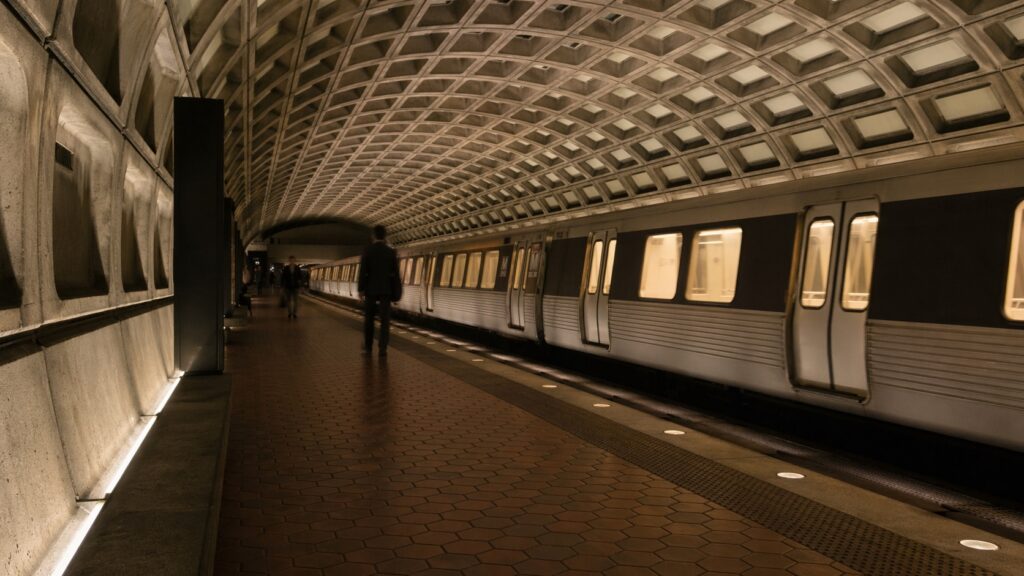
WASHINGTON, D.C. — Shortly after midnight on Wednesday, April 22, 2026, a Washington Metropolitan Area Transit Authority (WMATA) work vehicle struck a stationary Silver Line train at the Metro Center station. Eleven passengers were injured. According to NBC Washington and WUSA9, all injuries were treated as non-life-threatening and every rider was able to walk out of the station. WMATA General Manager Randy Clarke has confirmed that the National Transportation Safety Board (NTSB) is leading the federal investigation and that there is no preliminary indication of terrorism or infrastructure failure.
To anyone who has tracked two decades of major Metro incidents, the shape of the story is familiar. A breakdown happens in a system designed to prevent it. Federal investigators arrive within hours. The agency issues a public apology. Months later, a report identifies the specific procedural, training, or equipment failure that allowed the breakdown to occur. Whether, and how quickly, those findings translate into operational change is the question that matters most — and the question that history suggests should not be assumed.
A Pattern Our Firm Has Seen Up Close
Chaikin, Sherman, Cammarata & Siegel, P.C. has represented victims from nearly every major catastrophic train accident in the Washington, D.C. metropolitan area over the past two decades, including claims against WMATA, Amtrak, and CSX. The firm’s direct involvement in three of the most significant Metro incidents provides context for the questions now being asked at Metro Center:
- The 2004 Woodley Park collision. Two Metro trains collided at high speed at the Woodley Park station, with the striking train shearing away the aluminum casing of the second. Our firm secured a successful resolution for a passenger who suffered serious injuries. After that crash, the NTSB issued a federal recommendation urging Metro to improve railcar crashworthiness. Metro did not act on it.
- The 2009 Fort Totten Red Line crash. On June 22, 2009, two Red Line trains collided between the Fort Totten and Takoma stations during evening rush hour. Nine people died, including the train operator, and approximately 80 were injured. It remains the deadliest accident in Metro’s history. Our firm filed a wrongful death claim on behalf of one of the victims’ families. Partners Joseph Cammarata and Allan M. Siegel both served on the multi-party litigation steering committee and were key contributors to advancing the case toward trial. The plaintiffs alleged that many of the injuries and deaths could have been prevented had Metro implemented the Woodley Park–era crashworthiness recommendations. Years later, our firm covered Metro’s shutdown of the Red Line after detecting the same bobbing-circuit issue that caused the Fort Totten crash — a reminder that once-identified systemic issues can resurface when remediation is incomplete.
- The 2015 L’Enfant Plaza smoke incident. When a Yellow Line train filled with smoke in the tunnel outside L’Enfant Plaza on January 12, 2015, one passenger lost her life and 86 were hospitalized. Our firm represented eight of the injured passengers. Partner Allan M. Siegel served on the multi-party steering committee and was active in resolving those cases.
Three separate incidents. Three separate NTSB investigations. In each, federal investigators identified failures that were preventable — in communications, in equipment, in operational protocols, and in the oversight systems intended to catch problems before passengers were harmed.
What the NTSB Will Likely Examine at Metro Center
Federal investigators were underground at Metro Center within hours of the collision. Based on the public record and on our firm’s experience with prior Metro investigations, the following lines of inquiry can be expected:
- Communications between the Rail Operations Control Center and the work vehicle operator. Control-center communications have been central to the cause analysis in virtually every major Metro incident of the past two decades.
- Signal, track-occupancy, and dispatch systems. Whether the work vehicle was properly tracked into Metro Center, and whether the passenger train was protected by the signal system as designed.
- Movement protocols for non-revenue equipment. Work vehicles operate under different rules than revenue service, and those rules — and their adequacy — will be a focus of the Washington Metrorail Safety Commission‘s oversight.
- Prior near-misses and internal safety reports. Major incidents are rarely the first of their kind. Patterns of unaddressed warnings are frequently identified in post-incident review.
The NTSB’s recurring recommendations to transit agencies are chronicled in the agency’s annual Most Wanted List of safety improvements, which our firm has covered for years.
Why Early Evidence Preservation Matters for Injured Passengers
Event recorder data, station surveillance footage, dispatch audio, maintenance logs, and crew records are the backbone of a successful Metro injury claim. They are also perishable. Surveillance systems overwrite on routine cycles. Logs get consolidated. Witness memories fade. Our firm typically moves within days of an incident to issue formal preservation letters to WMATA and any involved contractors, because we have seen what happens when that evidence is not locked down early.
The Legal Framework for Claims Against WMATA
Claims against WMATA are not ordinary personal injury claims. WMATA was established by an interstate compact among Washington, D.C., Maryland, and Virginia, and that compact — along with the interaction of the three jurisdictions’ laws — governs where cases must be filed, what defenses are available, and which rules of liability apply. All three jurisdictions apply contributory negligence, which can bar recovery entirely if a plaintiff is found even slightly at fault. Responsibility may also extend beyond WMATA to private maintenance contractors, equipment manufacturers, and other third parties.
The D.C. Court of Appeals has previously held Metro accountable for premises-related failures, and federal safety inspections have identified a range of systemic dangers in the Metro system — both of which are relevant to the accountability framework passengers may rely on when pursuing a claim. These complexities are exactly why rail cases call for counsel with direct, documented experience against WMATA, and why the plaintiffs in every major Metro incident of the past two decades have historically been represented by coordinated steering committees of experienced trial counsel.
What Injured Passengers Should Consider Now
- Obtain medical attention, even for injuries that feel minor at first. Soft-tissue, concussive, and spinal injuries frequently present days or weeks after the incident.
- Preserve what you have — photos, notes, names of fellow passengers, and any paperwork received at the scene.
- Understand that deadlines for claims against transit authorities can be significantly shorter than for ordinary personal injury claims.
- Do not give a recorded statement to WMATA, an insurance carrier, or a third-party representative before speaking with counsel.
Looking Ahead
The NTSB’s final report on the Metro Center collision will take months to complete. In the interim, eleven passengers and their families will be navigating treatment, uncertainty, and a legal system that is poorly suited to the complexities of WMATA litigation. The deeper question — whether Metro’s systems are operated and maintained to the standard riders are entitled to expect — is older than any one administration at WMATA, and it is one our firm has been helping answer, one case at a time, since the Woodley Park litigation.
This is a living post. We will update it as the NTSB investigation develops and as additional facts become public.
Frequently Asked Questions
Does Chaikin, Sherman, Cammarata & Siegel have experience with WMATA cases?
Yes. Our firm has represented victims from nearly every major catastrophic DC-area train accident of the past two decades, including the 2004 Woodley Park collision, the 2009 Fort Totten Red Line crash, and the 2015 L’Enfant Plaza smoke incident. Partners Joseph Cammarata and Allan M. Siegel have both served on the multi-party litigation steering committees in those cases.
My injuries from the Metro Center collision feel minor. Do I need to consult an attorney?
In our experience, it is worth the conversation even for injuries that feel minor. Concussive, soft-tissue, and spinal injuries in rail collisions frequently present days or weeks later. Consulting an attorney early preserves your options without committing you to a lawsuit.
Can WMATA be sued directly?
WMATA can generally be held liable in personal injury cases, but the governing WMATA Compact and the interaction of D.C., Maryland, and Virginia law create procedural complexities that ordinary injury claims do not involve. Experienced counsel can identify the correct forum, the applicable deadlines, and every potentially responsible party.
Why does the NTSB investigation matter for my claim?
Findings from the NTSB shape what is known about cause and responsibility. There are specific rules about how NTSB reports can be used in civil litigation, but the underlying factual record — recovered data, crew statements, maintenance records — often defines how a case is built.
How long do I have to file a claim against WMATA?
Deadlines vary by claim and forum and may be significantly shorter than the standard three-year statute of limitations. Given the severe consequences of missing a deadline, prompt consultation with counsel is advisable.
About Chaikin, Sherman, Cammarata & Siegel, P.C.
Founded in 1969 and based at 1232 17th Street NW, Washington, D.C., Chaikin, Sherman, Cammarata & Siegel, P.C. is a personal injury firm practicing across Washington, D.C., Maryland, and Virginia. Our partners are recognized by Washington, D.C. Super Lawyers®, and the firm includes past presidents of the Trial Lawyers Association of Metropolitan Washington, D.C. We have recovered more than $500 million for our clients across medical malpractice, catastrophic injury, and wrongful death matters.
If you or a loved one was injured in the April 22 Metro Center collision or any other WMATA incident, contact us at (202) 659-8600 for a free consultation. Our train accident attorneys represent clients throughout D.C., Maryland, and Virginia.
This post reflects the firm’s commentary on a matter of public record and an ongoing federal investigation. It is not intended as legal advice and does not create an attorney-client relationship. Readers with specific legal questions should consult qualified counsel.