By Chaikin, Sherman, Cammarata & Siegel, P.C.
Legally Reviewed by Allan M. Siegel, Partner — Past Chair, American Association for Justice Bus Litigation Group
Published April 24, 2026 · Last Updated April 24, 2026
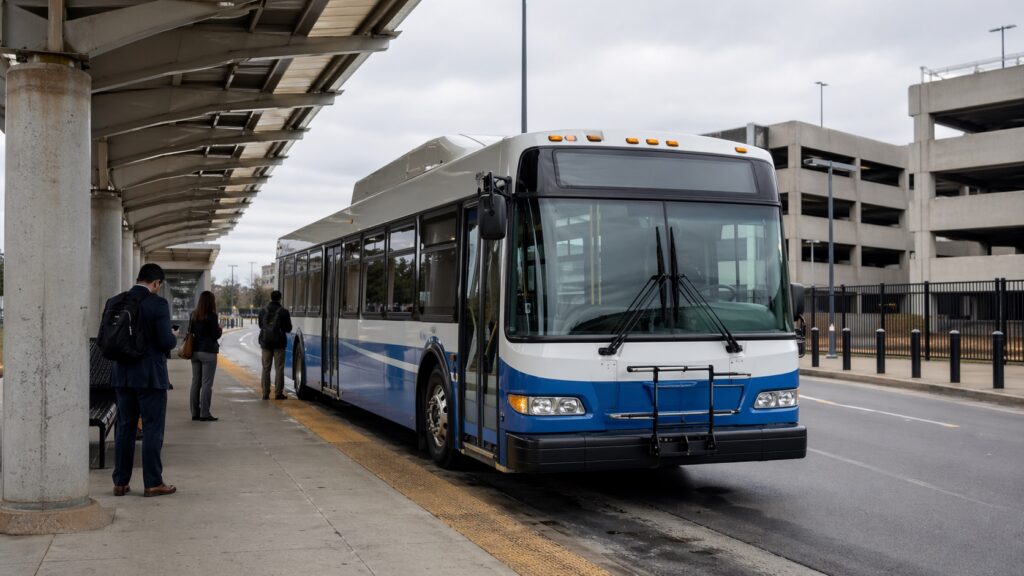
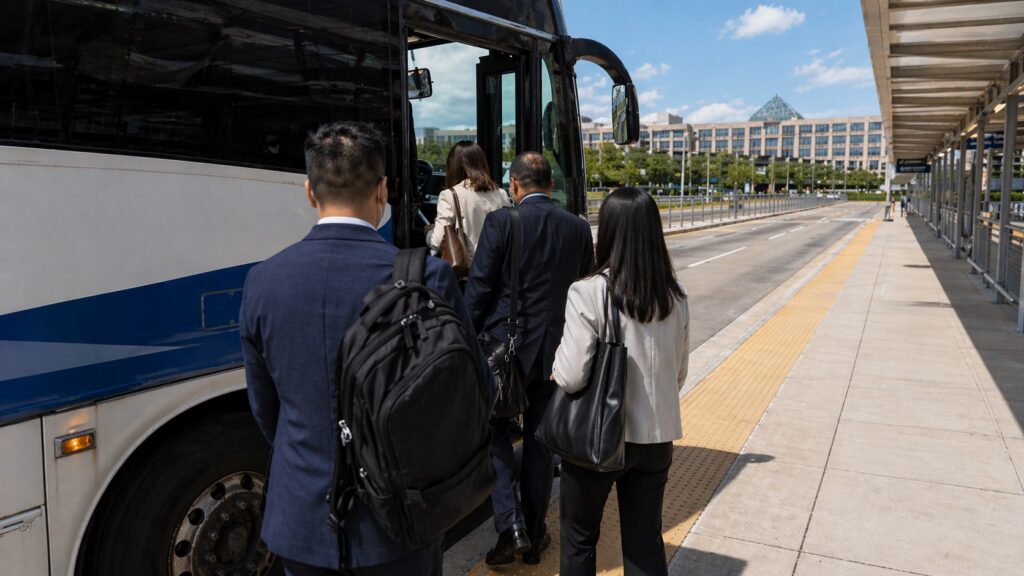
ARLINGTON, VA — A morning-commute collision between two government-affiliated commuter buses at the Pentagon Transit Center injured 23 people on Friday, April 24, 2026. According to WJLA (7News), WUSA9, and Fox News, a Fairfax County Connector bus and an OmniRide (Prince William County) commuter bus collided head-on at approximately 7:20 a.m. in the bus loop adjacent to the Pentagon’s South Parking Lot. Ten of the injured are Department of Defense personnel. First responders transported 18 people to area hospitals; five passengers were treated on scene and released. The Pentagon Force Protection Agency (PFPA) is leading the investigation, with support from Arlington County Fire and regional agencies. Metro Transit Police confirmed the buses involved do not belong to WMATA.
For the 23 passengers injured — and the thousands more who ride Fairfax Connector and OmniRide buses through the Pentagon Transit Center every working day — this collision raises a set of legal questions that differ materially from those that apply to a standard Virginia auto accident. The Pentagon Reservation is federal property. The buses are operated by two different Virginia governmental entities. Many of the riders are federal employees. Each of those facts carries its own procedural and substantive implications.
Our Firm’s Experience with Transit Bus Litigation
Chaikin, Sherman, Cammarata & Siegel, P.C. has represented injured bus passengers, pedestrians, and families of those killed in bus collisions for more than five decades. Partner Allan M. Siegel has served as Past Chair of the American Association for Justice Bus Litigation Group — the national section of the plaintiffs’ bar dedicated to bus and commercial transit cases. Partner Joseph Cammarata has served as Past Chair of the AAJ Brain Injury Litigation Group, which matters here because concussive injuries are among the most common — and most frequently missed at initial triage — in bus collision cases.
Representative outcomes that inform our approach to incidents like this one include:
- $4.5 Million verdict obtained by Partner Joseph Cammarata for a pedestrian struck by a transit bus in a crosswalk
- $780,000 verdict for a client hit by a WMATA Metrobus
- $455,000 verdict obtained by Partner Allan M. Siegel against Greyhound Lines, Inc.
- $315,000 recovery for a man run over by a bus
- $1.1 Million and $500,000 bus crash recoveries
Bus cases are not auto cases with bigger vehicles. Commercial carriers are held to a higher standard of care, the defendants often include government entities with specialized procedural rules, and the recoverable damages frequently involve catastrophic — not incidental — injuries. Managing all three requires counsel with documented experience on the plaintiff side of bus litigation specifically.
Why Pentagon Bus Crashes Raise Unusual Jurisdictional Questions
The Pentagon Transit Center presents a rare overlay of legal frameworks. The bus loop sits on federal property (the Pentagon Reservation) in Arlington County, Virginia. The buses themselves are operated by two different Virginia governmental or quasi-governmental entities — Fairfax County (Fairfax Connector) and the Potomac and Rappahannock Transportation Commission (OmniRide, operating on behalf of Prince William County and surrounding jurisdictions). The federal investigation is being led by PFPA, a Department of Defense component.
What that means in practice:
- Virginia law generally governs the tort claims, but the property’s federal status and the potential involvement of federal employees creates occasional procedural complications that do not arise in ordinary Arlington auto cases.
- The Virginia Tort Claims Act imposes its own procedural requirements on claims against Commonwealth agencies. Separately, claims against county-operated services like Fairfax Connector and regional transit authorities like PRTC/OmniRide may involve notice and filing windows considerably shorter than Virginia’s two-year personal injury statute of limitations — in some cases as short as six months.
- Virginia’s contributory negligence rule — one of the strictest in the country — can bar recovery entirely if a defendant demonstrates that a plaintiff was even slightly at fault. Application of that rule to transit passengers is typically straightforward, but proper pleading matters.
- Federal employees injured in the course of their employment may have their primary recovery limited to the Federal Employees’ Compensation Act (FECA), which preempts certain tort claims against the federal government. FECA generally does not, however, preclude third-party tort claims against non-federal defendants like Fairfax Connector or OmniRide.
The interplay of these frameworks is not intuitive, which is one reason transit passengers injured in collisions like this one routinely benefit from early legal consultation.
What the Investigation Will Examine
The PFPA investigation, along with any parallel state, county, or transit-authority inquiries, can be expected to examine:
- Driver actions and qualifications for both the Fairfax Connector and OmniRide operators, including hours-of-service compliance, training records, and drug/alcohol testing results
- Mechanical and maintenance records for both buses, particularly brake systems, steering components, and recent inspections
- Onboard video and audio from both vehicles — modern transit buses typically carry multiple cameras and event recorders
- Dispatch communications and GPS/fleet-management data from both operators
- The physical geometry of the bus loop, including signage, lane markings, and any recent changes to the traffic flow pattern
- Similar incidents at the Pentagon Transit Center or involving either operator
Evidence from these categories is often central to establishing liability, and it is perishable. Surveillance systems overwrite on routine cycles. Dispatch logs get consolidated. Witness memories fade. Our firm typically issues formal preservation letters to both carriers, PFPA, and any involved third parties in the first days after an incident.
What Injured Passengers Should Consider Now
- Seek medical attention, even if injuries feel minor. Concussive, soft-tissue, and spinal injuries in bus collisions — even low-speed ones — frequently present days or weeks after the impact. Early documentation matters both medically and legally.
- Preserve what you have. Photos, the names of fellow passengers, paperwork provided by PFPA or EMS at the scene, and timestamps of the event can matter substantially in a later claim.
- Understand that deadlines for claims against government transit entities can be significantly shorter than Virginia’s two-year statute of limitations.
- Do not give a recorded statement to Fairfax Connector, OmniRide, PFPA, or any insurance representative before consulting with counsel.
- If you were on federal business when injured — as many Pentagon-bound commuters are — understand that FECA may govern your employment-related recovery but typically does not preclude a third-party claim against the bus operators.
Looking Ahead
The PFPA investigation will develop over the coming days and weeks. Initial reporting suggests a low-speed impact with no life-threatening injuries, but experience teaches that “non-life-threatening” and “consequential” are different categories — the initial triage at an incident scene is rarely a reliable predictor of what passengers will experience in the weeks and months that follow.
Our firm continues to monitor the incident and stands ready to represent passengers, family members, and federal employees affected by this collision.
This is a living post. We will update it as the investigation develops and as additional facts become public.
Frequently Asked Questions
My injuries feel minor, and I was told I could go home. Should I still consult an attorney?
Bus collisions — even low-speed ones — commonly produce concussive, soft-tissue, and spinal injuries that don’t fully present for days or weeks. Consulting an attorney early preserves your options without committing you to a lawsuit, and the medical documentation created in the first few days is often central to how a later claim is evaluated.
Who can be held responsible for the Pentagon bus crash?
Potential responsible parties include the Fairfax Connector bus operator and Fairfax County, the OmniRide bus operator and the Potomac and Rappahannock Transportation Commission (PRTC), any third-party contractors involved in maintenance or operations, and in unusual cases, equipment manufacturers or federal property managers responsible for the bus loop’s design. Identifying every responsible party early is essential to maximizing recovery.
I’m a Department of Defense employee — does FECA prevent me from suing?
The Federal Employees’ Compensation Act (FECA) is typically the primary remedy for federal employees injured in the course of their employment. However, FECA generally does not preclude third-party claims against non-federal defendants like Fairfax Connector or OmniRide. A consultation with counsel can confirm what remedies apply to your specific situation.
How long do I have to file a claim?
Virginia’s general personal injury statute of limitations is two years. However, claims against government-affiliated transit entities often involve shorter notice deadlines — some as short as six months. Because the consequences of missing a deadline are severe, prompt consultation with counsel is strongly advised.
Has your firm handled cases against commuter bus operators like this?
Yes. Our firm has represented clients in bus collision matters for more than five decades, including verdicts and settlements against WMATA, Greyhound, and other transit operators. Partner Allan M. Siegel has served as Past Chair of the American Association for Justice Bus Litigation Group, the national section of the plaintiffs’ bar focused on commercial bus cases.
About Chaikin, Sherman, Cammarata & Siegel, P.C.
Founded in 1969 and based at 1232 17th Street NW, Washington, D.C., Chaikin, Sherman, Cammarata & Siegel, P.C. is a personal injury firm practicing across Washington, D.C., Maryland, and Virginia. Our partners are recognized by Washington, D.C. Super Lawyers®, and the firm includes four past presidents of the Trial Lawyers Association of Metropolitan Washington, D.C. We have recovered more than $1 billion for our clients across catastrophic injury, medical malpractice, and wrongful death matters.
If you or a loved one was injured in the April 24 Pentagon bus collision, contact us at (202) 659-8600 for a free consultation. Our bus accident attorneys represent clients throughout Northern Virginia, Washington, D.C., and Maryland.
This post reflects the firm’s commentary on a matter of public record and an ongoing federal investigation. It is not intended as legal advice and does not create an attorney-client relationship. Readers with specific legal questions should consult qualified counsel.