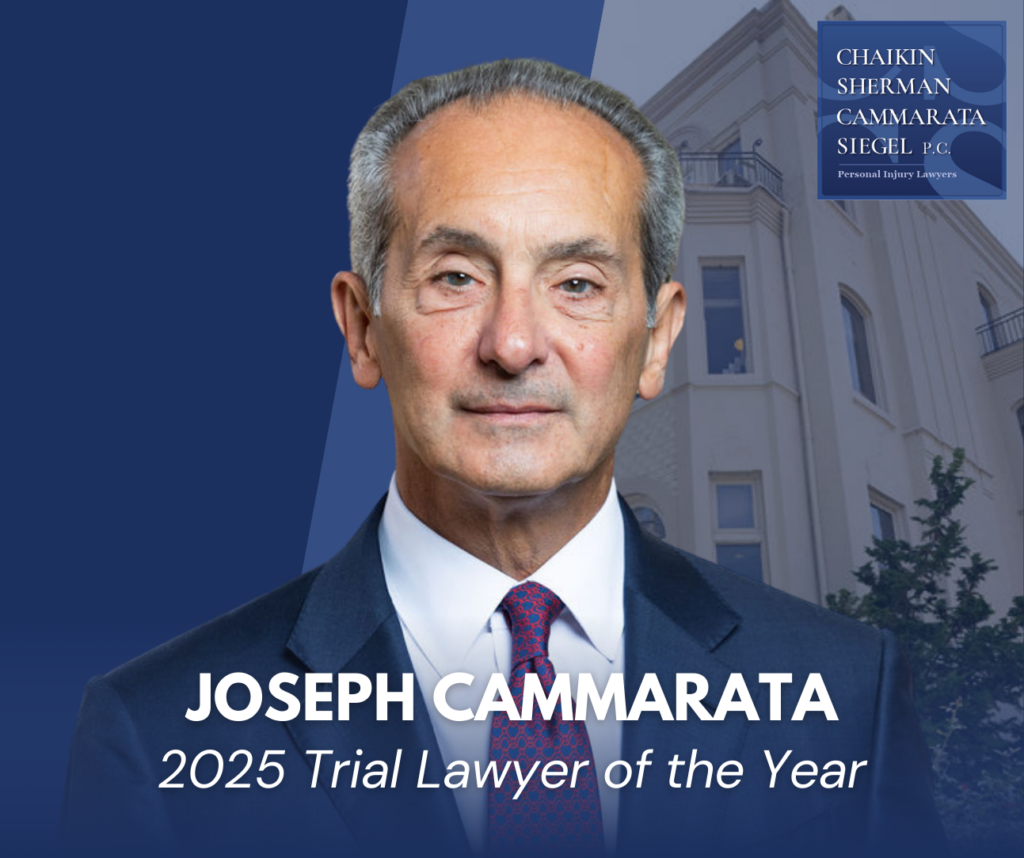
By Joseph Cammarata,Partner, Chaikin, Sherman, Cammarata & Siegel, P.C.
Editor’s Update — May 14, 2026:
On May 7, 2026, attorneys for Ms. Torney filed a motion asking the Supreme Court of Maryland to reconsider the dismissal addressed in this post and to reinstate the writ of certiorari. For the legal arguments and public-importance reasoning behind the motion, see our follow-up post: Catherine Torney’s Petition Returns to the Supreme Court of Maryland: Motion for Reconsideration Filed in Premises Liability Case Raising Questions of Public Importance.
Originally Published April 23, 2026
WASHINGTON, D.C. — On April 21, 2026, the Supreme Court of Maryland issued a brief per curiam order dismissing Catherine Torney v. Towson University as improvidently granted. The order was entered just two weeks after oral argument, in which I had the privilege of arguing on behalf of Ms. Torney — alongside my co-counsel, Stephen Ollar — that the Appellate Court of Maryland had incorrectly applied the state’s premises liability framework in concluding that Towson University owed her no duty of care.
The dismissal leaves the appellate court’s rulings in the university’s favor in place. The Supreme Court ordered Towson to pay the costs of the appeal, but issued no opinion, offered no reasoning, and did not reach the underlying legal question it had agreed in January to decide.
For a full discussion of the oral argument and the legal issues at stake, see our earlier post:Partner Joseph Cammarata Argues Before the Supreme Court of Maryland in Landmark Premises Liability Case. That post includes the full recording of the oral argument and a detailed analysis of the invitee/licensee question, and the foreseeability standard. Coverage of the argument and the dismissal has appeared in The Daily Record,The Towerlight, WBAL-TV, and The Baltimore Banner.
This follow-up addresses the Order itself, what a dismissal as improvidently granted means under Maryland appellate practice, and why the legal question in this case remains unresolved for future litigants.
What “Dismissed as Improvidently Granted” Actually Means
A dismissal as improvidently granted — sometimes abbreviated as a “DIG” — is a distinctive and relatively uncommon form of appellate disposition. It occurs when a court that has previously agreed to hear a case determines, after reviewing the briefs and hearing argument, that review should not have been granted in the first place. The court declines to issue an opinion on the merits. The lower court’s decision stands as if the appeal had never been taken. The dismissing court does not ordinarily explain its reasons.
Having litigated appeals at both the state and federal level — including Clinton v. Jones, 520 U.S. 681 (1997), argued before the United States Supreme Court — I can offer some context on how these orders are typically understood within appellate practice. A DIG is not a decision on the merits. It does not endorse the lower court’s reasoning. It does not reject the arguments made by the party who sought review. Courts that issue DIGs often do so when, after full consideration, they conclude that the case is not a suitable vehicle for deciding the legal question because there is truly no issue of public importance in the case or perhaps because of factual complications not apparent at the certiorari stage, jurisdictional concerns that emerge on closer review, or a determination that the question would be better addressed in a different case. What a DIG is not is a substantive ruling against the petitioner.
For Torney v. Towson University, this distinction matters. The Appellate Court’s dismissal of Ms. Torney’s negligence claim stands. But the Supreme Court of Maryland has not endorsed the Appellate Court’s analysis. The state’s highest court has simply elected not to weigh in on the question at this time.
Responding to the Order
In comments to The Daily Record and The Towerlight following the Order, I expressed both my disappointment for our client and my surprise at the court’s reversal of course after granting review and hearing argument.
“It’s disappointing. I was looking forward to a favorable decision on behalf of Ms. Torney, but we don’t get that opportunity.”
“I was surprised. We’ll never know what the court was thinking on the change of heart. Apparently, they had second thoughts about the importance of this issue.”
The Maryland Office of the Attorney General, which represented Towson University, has not commented publicly on the dismissal.
The Question That Remains Open
The Supreme Court of Maryland agreed to hear this case because the question presented was significant. Under Maryland law, the duty a landowner owes to a person on its property depends on the injured party’s legal status — invitee, licensee, or trespasser — and on the foreseeability of the harm that occurred. Throughout the lower court proceedings, both sides treated Ms. Torney as an invitee. It was not until the Supreme Court level that the university advanced the position that Ms. Torney should be reclassified as a “bare licensee” because the event she attended was unsanctioned.
The deeper issue — the one that made this case a candidate for the highest court’s review — is how Maryland defines foreseeability in the premises liability context. Maryland courts have long applied a “general field of danger” standard: the question is not whether the landowner foresaw precise harm or the specific mechanism of injury, but whether the overall circumstances presented a range of dangers that a reasonable landowner should have anticipated would cause harm. The university’s position, which I challenged at oral argument, would have narrowed this standard considerably — essentially requiring a landowner to have directly observed a specific threat before any duty to act would arise.
That is not the law in Maryland, in my view, and it is not what the general field of danger doctrine has ever required. Whether the state’s highest court agrees has, for now, been left for another case.
Meanwhile, the circumstances that gave rise to this litigation continue to recur across Maryland — on university campuses, at commercial venues, and in other public-facing premises where landowners have knowledge of escalating conditions and choose whether or not to intervene. As my co-counsel Stephen Ollar and I wrote in our petition briefing, the issue “will arise in Maryland again, and again, and again.” The DIG does not change that. It simply defers the question.
Why This Matters for Maryland Premises Liability Going Forward
For Maryland injury victims, the Order leaves the existing framework in place.Premises liability cases in Maryland will continue to be analyzed under the traditional categories of invitee, licensee, and trespasser, with the foreseeability question evaluated on the specific facts of each case. Maryland also applies the strict doctrine ofcontributory negligence, under which an injured person found even slightly at fault may be barred from any recovery — a rule that makes the duty and foreseeability analysis at the outset of these cases particularly consequential.
What the dismissal does not do is establish any new rule, narrow the existing framework, or provide appellate guidance that favors landowners seeking to avoid liability for third-party violence on their property. The Appellate Court’s unreported decision in Ms. Torney’s case remains the ruling of the intermediate court in that matter, but it is not binding precedent on other courts considering similar questions. For future cases, counsel and courts will continue to work with the established Maryland authorities on duty, foreseeability, and the scope of a landowner’s obligations to invitees.
Continuing the Work
Taking a case to a state’s highest court is rarely a matter of individual vindication alone. Cases reach supreme courts because the legal questions they present test the boundaries of existing law. Even when a particular appeal does not yield a favorable decision — or, as here, any decision at all — the briefing and argument contribute to the record future courts will work from.
Chaikin, Sherman, Cammarata & Siegel, P.C. has for more than fifty years handled complex premises liability matters that require this kind of sustained advocacy. Our firm will continue to take these cases — at the trial level, on appeal, and, when the right facts and the right moment align, before the state’s highest courts.
Update — May 14, 2026:
On May 7, 2026, my co-counsel and I filed a motion asking the Supreme Court of Maryland to reconsider its dismissal and to reinstate the writ of certiorari. The motion argues that the legal question the Court agreed in January to decide — the scope of a landowner’s duty to protect invitees from foreseeable criminal acts involving firearms — remains a matter of public importance that warrants the Court’s review. The Court has not yet ruled on the motion.
Ms. Torney’s willingness to press the issue through four years of litigation, from the Baltimore County Circuit Court to the Appellate Court of Maryland and now twice before the Supreme Court of Maryland, has contributed to the public record on a question that Maryland courts will have to face again. I remain honored for the opportunity to represent her, and we will provide a further update when the Court rules on the motion.
Frequently Asked Questions
What does “dismissed as improvidently granted” mean? A dismissal as improvidently granted — sometimes abbreviated as a DIG — is an order from the Supreme Court stating that, on further consideration, the court should not have agreed to hear the case in the first place. The court does not issue a substantive opinion and does not resolve the legal question presented. The effect is that the lower court’s decision remains in place. High courts generally do not explain the reasons for a DIG, and the dismissal does not create binding precedent on the underlying legal issue.
Does a DIG mean the losing side’s arguments were rejected on the merits? No. A dismissal as improvidently granted is expressly not a decision on the merits. The court is neither endorsing the lower court’s reasoning nor rejecting the arguments presented by the party that sought review. The court is declining to rule at all.
What happens to Ms. Torney’s case now? The Supreme Court of Maryland’s dismissal leaves in place the earlier rulings of the Appellate Court of Maryland, of which dismissed Ms. Torney’s negligence claim against Towson University on the basis that the university owed no duty of care under the facts alleged. There is no further state court review available in this matter.
Is this order binding on other Maryland premises liability cases? No. Because the Supreme Court of Maryland did not issue an opinion on the merits, the order has no precedential effect on the broader legal question. The existing Maryland framework for premises liability — based on the injured party’s legal status and on foreseeability under the general field of danger standard — continues to apply as it did before the court granted review.
Why does this outcome matter beyond this one case? The legal question presented — the scope of a landowner’s duty to protect invitees from foreseeable third-party violence, including gun violence, particularly where the landowner has knowledge of escalating conditions and law enforcement on the scene — reaches far beyond any one property or incident. Universities, commercial venues, and public accommodations across Maryland routinely host invitees in settings where conditions can deteriorate. The absence of a Supreme Court of Maryland decision means these questions will continue to be litigated case by case under the existing framework, with the appellate question available to be raised again by future litigants.
About Joseph Cammarata
Joseph Cammarata is a partner at Chaikin, Sherman, Cammarata & Siegel, P.C. and a dual board-certified civil trial attorney with more than four decades of experience representing injured individuals and their families. He was selected as a Class of 2026 Virginia Lawyers Hall of Fame Honoree by Virginia Lawyers Weekly and was named the 2025 Trial Lawyer of the Year by the Trial Lawyers Association of Metropolitan Washington, D.C.
Mr. Cammarata is nationally recognized for his role as lead counsel in Clinton v. Jones, 520 U.S. 681 (1997) — a unanimous United States Supreme Court decision establishing that a sitting president may be sued in civil court while in office. He is a past Chair of the American Association for Justice’s Traumatic Brain Injury Litigation Group, co-founded the Brain Injury Association of D.C., and authored the District of Columbia’s Athletic Concussion Protection Act of 2011. He argued Torney v. Towson University alongside co-counsel Stephen Ollar.
If you or a loved one has been injured due to dangerous conditions on someone else’s property, contact Chaikin, Sherman, Cammarata & Siegel, P.C. at (202) 659-8600 for a free consultation. Our attorneys represent clients in premises liability cases across Washington, D.C., Maryland, and Virginia.
This post reflects the author’s commentary on a matter of public record. It is not intended as legal advice and does not create an attorney-client relationship. Readers with specific legal questions should consult qualified counsel.