
Common Misconceptions About Seat Belt Safety
Seat belts are a critical safety feature in all motor vehicles. Shoulder belts and lap belts are designed to secure occupants in their seats, reducing the risk of injury during a car accident by preventing drivers and passengers from being thrown against the vehicle interior, or worse, ejected from it completely resulting in critical injuries. By keeping passengers in place, seat belts distribute the forces of a crash more evenly across the stronger parts of the body, such as the pelvis and rib cage. Seat belts reduce injuries and the likelihood of fatalities. Simply put, seat belts save lives. Despite these clear benefits, many myths result in people doubting their lifesaving value and not using the single most effective way to minimize critical injury when involved in a car accident. Here are some common myths and facts related to seat belt safety.
Myth: Seat belts are unnecessary for short trips.
Fact: Most accidents occur close to home, so it’s crucial to wear a seat belt even if you are traveling a short distance.
Myth: Seat belts can trap you in a car during an accident if there is a burning or submerged vehicle.
Fact: Wearing seat belts increases your chances of remaining conscious, making it more likely you’ll be able to free yourself if needed, even during crashes involving fire or water.
Myth: It’s safer to be thrown clear of the wreckage in a crash.
Fact: Being ejected from a vehicle significantly increases the risk of severe injury or death. Seat belts keep you securely in place, reducing injuries.
Myth: Seat belts will prevent me from escaping a crash.
Fact: Seat belts are designed to prevent you from being knocked unconscious in passenger vehicles.
Myth: Seat belts are not necessary in larger vehicles, such as SUVs or trucks.
Fact: All vehicles can be involved in accidents, and seat belts are vital safety devices regardless of the vehicle type.
Myth: I don’t need to wear a seat belt if my car has airbags.
Fact: Airbags are designed to work alongside seat belts, not replace them. Without a seat belt, the force of an airbag can cause significant injuries. Both a seat belt an an airbag are necessary to fully protect yourself in an accident.
Myth: You are safe in the back seat without a safety belt.
Fact: Studies have shown that wearing a seat belt in the back seat can reduce the risk of fatal injuries by nearly 60%.
Myth: Wearing a seat belt only impacts me.
Fact: Seat belts are crucial for all passenger vehicle occupants’ safety in a vehicle. If a passenger is not buckled up during a crash, their body can become a projectile, posing a significant risk to other occupants. This can lead to severe injuries or even fatalities, making it clear that wearing a seat belt helps protect not just the individual but everyone in the vehicle.
Proper Seat Belt Safety
Wearing a seat belt in the proper position every time you get into a motor vehicle ensures maximum protection and effectiveness. Here are some key steps to follow for proper seat belt use:
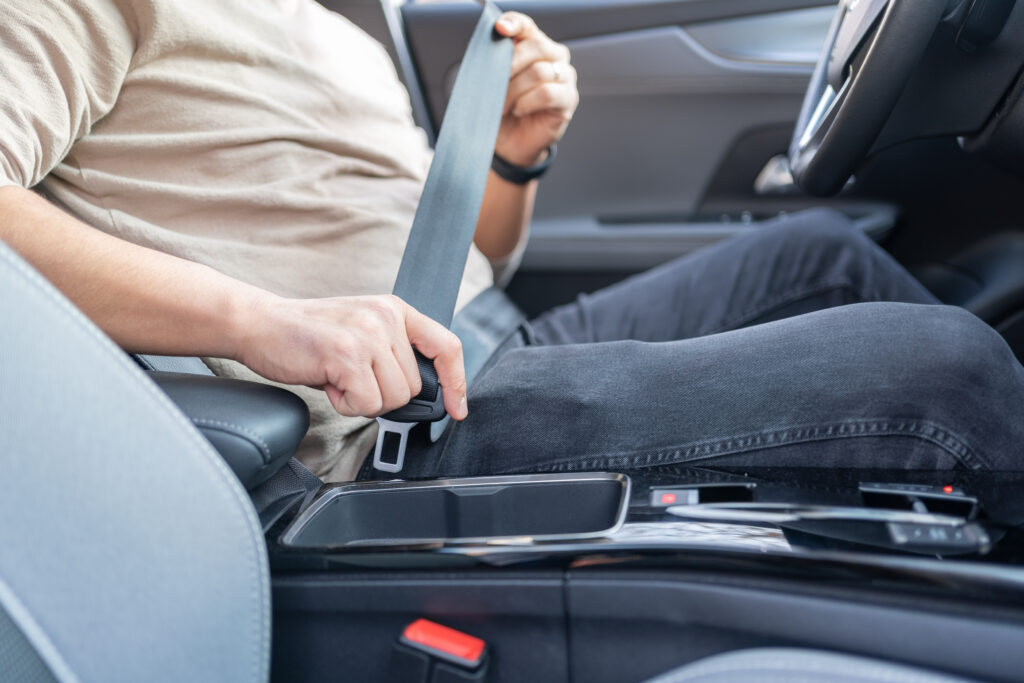
- Position the Lap Belt: The lap belt should lie snugly across your hips and upper thighs, not your stomach. This positioning helps to distribute the force of a collision over the strongest parts of your pelvis and prevent internal injuries.
- Adjust the Shoulder Belt: The shoulder belt should cross the middle of your chest and shoulder, away from your neck. Avoid tucking it behind your back or under your arm, as this can cause serious injuries in a crash.
- Tighten the Belt: After fastening, pull the seat belt to remove any slack. A tight belt ensures that you stay firmly in place and reduces the risk of moving forward in the event of an impact.
- Proper Fit for Children: Ensure children are using an appropriate child safety seat or booster seat based on their age, height, and weight. The child restraint system should be installed according to the manufacturer’s instructions.
- Check for Twists: Ensure the belt is flat and free of twists. Twists can cause the belt to apply uneven pressure during a crash, which could lead to injury.
By following these guidelines, you can enhance your safety and the safety of your passengers. Proper seat belt use is a simple yet highly effective way to protect yourself on the road.
Seat Belt Syndrome
Seat belt syndrome refers to a range of injuries that can occur as a result of wearing both a shoulder belt and a lap belt during a car accident. While safety belts are essential for preventing fatal injuries, the force exerted upon impact can sometimes cause harm to the body, particularly if the seat belt is not worn correctly. Common injuries associated with seat belt syndrome include bruising and abrasions on the chest and abdomen, fractures to the ribs and sternum, and internal injuries to organs such as the intestines and spleen. Symptoms may also involve shoulder pain and abdominal discomfort, which should be evaluated by a medical professional. Proper usage of seat belts, including ensuring they fit snugly and are positioned correctly over the shoulder and pelvis, can minimize the risk of seat belt syndrome while maintaining their life-saving benefits.
Driving Without A Seat Belt
Choosing not to wear a seat belt while driving or riding in a vehicle significantly heightens the risk of injury or death in the event of a car accident. According to the National Highway Traffic Safety Administration (NHTSA), seat belts reduce the risk of fatal injury to front-seat passenger car occupants by 45% and the risk of moderate to critical injury by 50%. Without a seat belt, occupants can be thrown from the vehicle, collide with the dashboard, windshield, or steering wheel, or be ejected entirely, all of which can result in catastrophic injuries or fatalities.
Fatal Crashes Due to Lack of Seat Belts
The tragic reality of traffic accidents is underscored by the high number of passenger vehicle occupants killed each year. According to the National Highway Traffic Safety Administration (NHTSA), thousands of people are fatally injured annually in motor vehicle crashes, and a significant portion of these fatalities involve passengers who were not wearing safety belts. In 2019 alone, data revealed that nearly half of all passenger vehicle occupants who died in crashes were unrestrained at the time of the incident. This statistic highlights the critical importance of seat belt use, as wearing a safety belt is one of the simplest and most effective ways to prevent fatalities in the event of an accident.
Additional Consequences of Improper Seat Belt Use
Beyond the physical dangers, there are legal and financial repercussions for not wearing seat belts. Fines and penalties for seat belt violations vary by state but can include monetary fines, court costs, and increased insurance premiums. In many jurisdictions, not wearing a seat belt and getting into an accident can also affect the outcome of personal injury claims, with some states reducing compensation based on the fault percentage attributed to not wearing a seat belt.
Furthermore, not wearing seat belts sets a dangerous precedent, particularly for young passengers and impressionable drivers who might view the behavior as acceptable. This can perpetuate a cycle of unsafe driving practices and lead to a higher incidence of injuries and fatalities on the road. Ultimately, the consistent use of seat belts is a simple yet crucial measure every driver and passenger can take to protect their safety and well-being.
What to Do If You Have Been Injured in a Car Accident
If you have been injured in a motor vehicle accident, it’s essential to take certain steps to protect your health, legal rights, and financial interests. Here is a guide on what to do if you find yourself in this situation:
- Seek Medical Attention: Even if you do not feel immediate pain, some injuries may not manifest until later. Seek medical evaluation as soon as possible to identify and treat any injuries. Keep all medical records and receipts as they will be important for your claims.
- Report the Accident: Notify the police immediately and ensure a formal accident report is filed. The report provides an official record of the incident, which can be crucial for insurance claims and potential legal actions.
- Document the Scene: If you are able, gather evidence from the scene of the accident. Take photographs of the vehicles involved, your injuries, road conditions, and any other pertinent details. Collect contact information from witnesses willing to provide statements.
- Exchange Information: Obtain the contact, vehicle, and insurance information from all parties involved in the accident. Avoid discussing fault or details about the accident at this stage; only exchange necessary information.
- Notify Your Insurance Company: Contact your insurance provider as soon as possible to report the accident. Follow their procedures for filing a claim.
- Consult With An Attorney at Chaikin, Sherman, Cammarata & Siegel: If you have sustained severe injuries or if there is a dispute regarding fault, it may be beneficial to consult a car accident attorney. Legal professionals can guide you through the process, protect your rights, and help you seek fair compensation for your damages.
- Keep Records: Maintain detailed records of all communications related to the accident, including medical visits, treatments, and any correspondence with insurance companies or legal representatives. This documentation can be invaluable in supporting your case.
By taking these steps, you can help ensure your physical recovery and protect your legal and financial well-being following a car accident.
Chaikin, Sherman, Cammarata & Siegel Are Dedicated to Car Accident Injury Victims
When you are involved in a car accident and sustain injuries, navigating the aftermath can be overwhelming and stressful. As a dedicated team specializing in personal injury cases, Chaikin, Sherman, Cammarata & Siegel are committed to helping injury victims seek the compensation they deserve. Understanding that each case is unique, we offer personalized attention and strategic legal representation, ensuring that our client’s rights and interests are vigorously defended. Contact us today for a free consultation.