Speaker 1 (00:00):
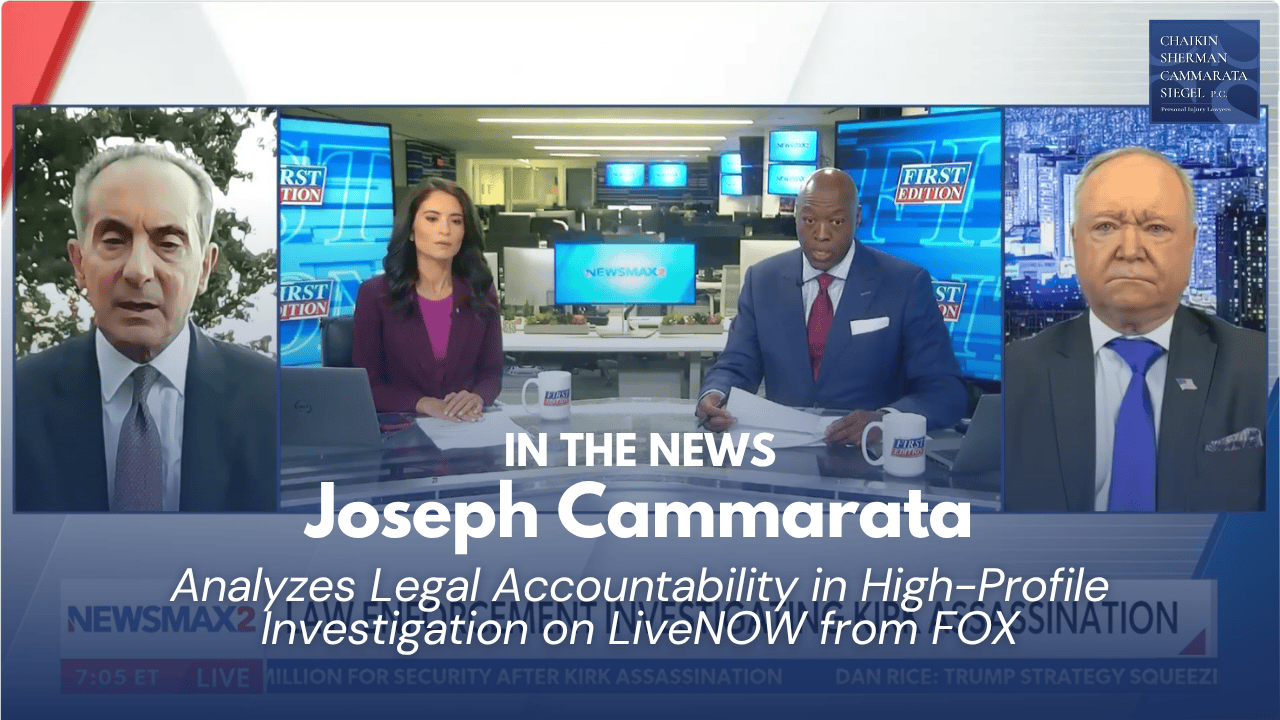
Joining us now to discuss. Joseph Camarata is a trial attorney. Also with us is John Krinski, is a detective sergeant in the Connecticut Police Department and former president of the Connecticut State FOP. Good morning gentlemen. Appreciate your joining us.
Speaker 2 (00:14):
Good morning. Good morning.
Speaker 1 (00:16):
Starting with you, Joseph. Violence has long been a feature of radical left wing movements, but today it’s no longer an outlier. Acceptance of political violence is growing on the left even among mainstream Democrats, so what can law enforcement do as well as the legal system about this threat?
Speaker 3 (00:35):
Well, threats to the public order or not to be taken lightly that the law enforcement officials state and local and federal need to tamp down on the rhetoric that there is on the social media platforms. I think that there’s a responsibility, the social media companies, to eliminate that type of terrible talk of violence. It just perpetuates the harm that the citizens are going to face. It engages, as Governor Cox has said, it’s, I think it just builds and builds rage among the citizens and, excuse me,
Speaker 4 (01:26):
Finish your thought.
Speaker 3 (01:28):
It just builds rage within an individual, so it pits one individual against another. There’s just an opportunity to say and do whatever you want online without any type of accountability. There can be laws as Utah has attempted to enact that restrict such conduct on social media. There can be laws that are put in place to restrict violence at protests. Yes, we can say and speak our mind, but when it turns to hate speech, when it turns to terrorist type of activities, sought to incite fear in other citizens and tamp down on another person’s belief, the law enforcement can step in, should step in, the legislature should act to prevent such behavior.
Speaker 4 (02:28):
Agreed and against recommendations from some in law enforcement. FBI, director Cash Patel and his team pushed for the release of video footage in enhanced stills of the suspect. Because of that, the suspect’s own father told police he recognized his son in that video. John, while were some in law enforcement opposed to releasing the videos and still shots,
Speaker 2 (02:53):
I honestly have absolutely no idea. It makes zero sense. The only time that you don’t want to release those items is when you know who the suspect is and you’re tracking him. You don’t want him to be aware that you know who he is. In this case, where he was unknown at the time, all you had was the video. That’s the best thing that you can do is put it out to the public because there were nice, clear shots. In this day and age, ring doorbells, everything is pretty much going to be on camera, and if you don’t know who that is, when you put it out to the public in less than an hour or two, you’re going to get somebody to call in and say, yep, that’s who it is. I know him. It’s my neighbor, my son, my coworker.
Speaker 1 (03:38):
Well, more suspect details. Listen to what the Governor of Utah had to say.
Speaker 5 (03:44):
Some outlets are reporting that the suspect lived with a transgender partner. Is that accurate, and are investigators looking at this part of his life as a possible motivation?
Speaker 6 (03:57):
Yes, definitely, and yes, I can confirm that. I know that has been reported and that the FBI has confirmed that as well, that the roommate was a romantic partner, a male transitioning to female. I can say that he has been very cooperative. This partner has been incredibly cooperative, had no idea that this was happening and is working with investigators right now.
Speaker 1 (04:25):
This as the president shared the same details in an interview with Newsmax as Rob Schmidt. Joseph, what’s your reaction?
Speaker 3 (04:34):
Well, he had a trans girlfriend, so what he had a depraved mind, which set him on a course to kill another human being that shouldn’t be tolerated. Frankly, I don’t care who he hangs out with in terms of his romantic life, but to the extent that that spills over somehow and creates some construct in his mind to go out and kill somebody, then that’s a problem. I think people want to try to understand what is the motive. If you don’t have a direct evidence, and it seems that law enforcement does have direct evidence of his being the assassin, him being the assassin, well then you look for motive, opportunity and intent, and in this case, he had the opportunity and he had the intent, and he carried out the intent. Yes, we all want to know what caused this lunatic to act the way he did. Was it his leftist leanings? Was it his deep dive into the deep internet, dark internet? Was it his conjuring up bad thoughts with colleagues and friends of his, but in the end it was his sick mind that led him to take a life of another human being?
Speaker 4 (06:03):
The thing is, I agree with what you said with concerning his sexuality has nothing to do with the heinous act. However, Erica Kirk, Charlie’s widow speaks out seemingly. The thing is she’s actually suggesting more than one person could possibly be responsible for a husband’s death. Take a listen.
Speaker 5 (06:28):
The evil doers responsible for my husband’s assassination have no idea what they have done.
Speaker 4 (06:41):
Now, the investigation is underway, but given the distance of the shot and what little we do know at this point about the suspect, could others have been involved? John,
Speaker 2 (06:53):
I have full faith in Dan Bonino and Cash Patel to fully investigate this. What they’re going to do now to prove or disprove that theory is they’re going to do a deep dive into all his communications. It’ll be every social media that he has, his laptop, his cell phone, gamers online. They can check all of that, and if any of the discussions were with somebody else in reference to How should I do it, where should I do it, can you supply me a weapon? They’re going to locate that and we’re going to know, from what I’m hearing right now, I don’t believe that’s probably going to be the case, but they will fully investigate that and come to a conclusion.
Speaker 1 (07:40):
Joseph, in terms of the case with respect to the trial, I mean in most cases, individuals like this typically take their own life or are taken out by police. In this case, the trial will play out in front of us. How do you think it will transpire here?
Speaker 3 (07:57):
Well, first of all, there’s going to be an arraignment. There was a probable cause affidavit that led to his arrest, which was quite detailed and laid out the evidence that the state believed they had against this suspect and that led to his arrest. Tuesday is the target day when the state will present what causes of action or claims they have against this suspect. One is aggravated murder, another is obstruction of justice, and another is deadly use of a firearm or discharge of a firearm. The aggravated murder charge carries with it potential for a death penalty because he put in grave risk of death, others in the crowd, in addition to Charlie Kirk, and so the state has 60 days from the date of arraignment or the date when they present the charges to notify the suspect of their intent to pursue the death penalty.
Speaker 1 (09:07):
Well, thank you so much for laying that out for us. Thank you both for your insights. Joseph Camarata and John Kapinsky. Appreciate your joining us this morning.