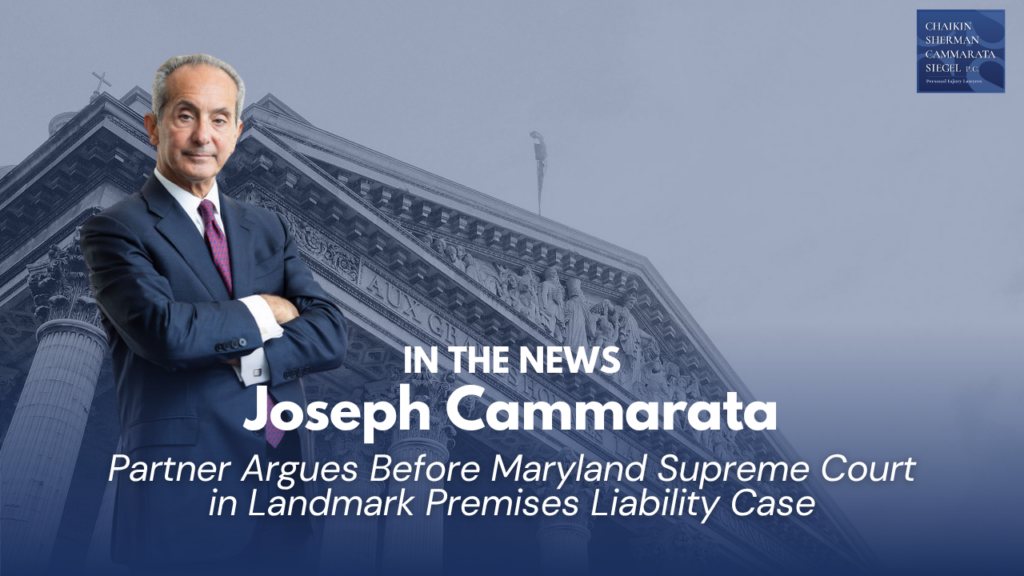
Premises liability law turns on a single question: When a landowner is aware of danger on its property and has the ability to intervene — but chooses not to — does inaction constitute negligence? That question went before Maryland’s highest court on April 9, 2026, when Joseph Cammarata argued Torney v. Towson University, a case that could reshape how universities (and all landowners) answer for safety failures. The case tests whether foreseeability means you must predict the exact mechanism of harm, or whether it means anticipating that some form of harm could occur when conditions are escalating and untrained.
Cammarata’s core argument was direct: The university had police officers present, visible signs of escalating danger, and officers recommending shutdown — yet leadership directed them to stand down. The university’s own internal investigation later suspended the supervising officer for failing to act. If trained police should have recognized the danger, how can the law excuse the university’s deliberate inaction? The Supreme Court’s decision, expected later this year, will determine whether Torney’s case proceeds to trial and what standard applies to institutions aware of risk on their property.