
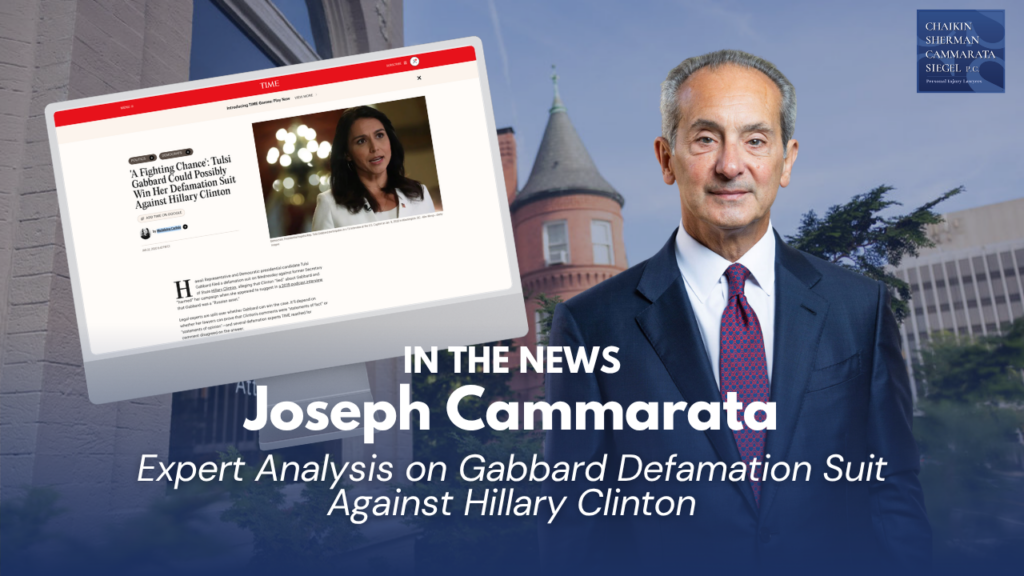
When a prominent political figure makes statements about another politician, when does commentary cross the line into defamation? Joseph Cammarata, partner at Chaikin, Sherman, Cammarata & Siegel and expert in high-profile defamation cases, addressed this question in TIME magazine regarding Tulsi Gabbard’s lawsuit against Hillary Clinton. The case centered on Clinton’s podcast interview statements calling Gabbard a “Russian asset”—a serious accusation in the context of 2020 election interference concerns. Gabbard’s $50 million defamation lawsuit argued that Clinton’s statements were false and damaging to her political and personal reputation. Cammarata assessed Gabbard’s case as strong, analyzing the defamation elements under established law. He explained that Clinton’s statements would have been understood by listeners as assertions of fact, not protected opinion. The phrase “Russian asset,” in context, conveyed that Clinton had knowledge of specific facts supporting this characterization—not merely her opinion about Gabbard.
Under defamation law, statements that appear to be opinions but actually assert underlying facts can be actionable. Cammarata’s analysis to TIME emphasized that Clinton’s credibility and public prominence would have led listeners to believe she was speaking from knowledge or “undisclosed facts,” not mere speculation. This transforms the statements from protected opinion into statements of fact—subject to defamation liability if false and damaging. Gabbard’s case ultimately settled, but Cammarata’s legal assessment demonstrated that even lawsuits against powerful, famous defendants can have merit when the statements made are factually false and cause demonstrable harm. His willingness to assess the case’s strength—despite the prominence of the defendant—reflected his professional obligation to evaluate claims on their legal merits rather than the political stature of the parties involved.
High-profile defendants don’t get automatic immunity from defamation liability. For defamation or civil litigation representation, contact us to discuss your case.