
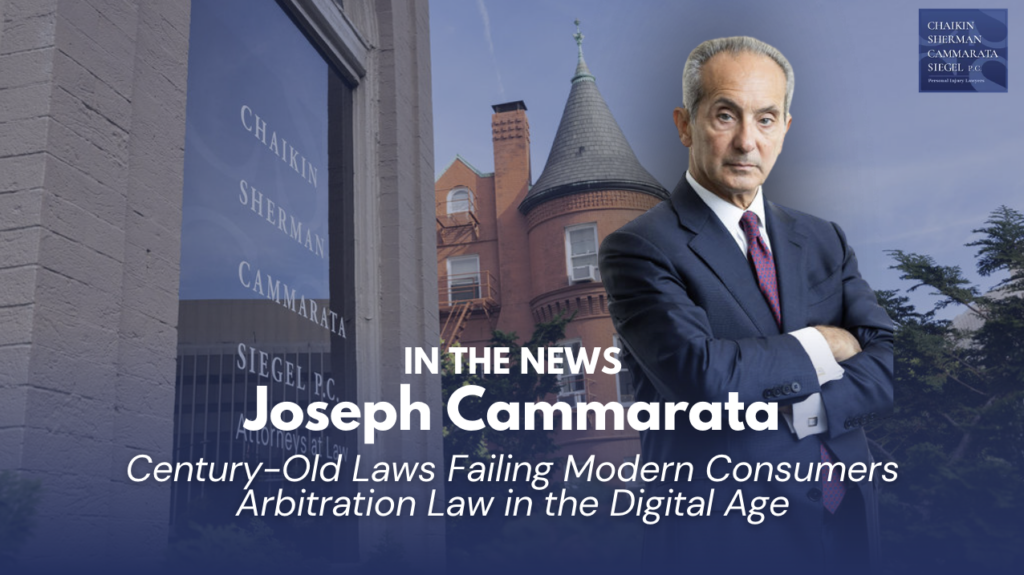
Arbitration clauses buried in consumer agreements increasingly prevent individuals from accessing courts and jury trials when disputes arise with large corporations. Joseph Cammarata, partner at Chaikin, Sherman, Cammarata & Siegel, examines this critical issue in Business Insider, highlighting how century-old arbitration laws are being used in ways the original legislation never anticipated. The Federal Arbitration Act, enacted in 1925, was designed to streamline commercial disputes between businesses—not to shield corporations from individual consumer claims. Yet modern arbitration clauses, often hidden in fine print of digital services agreements, effectively require consumers to waive their right to court access before any dispute occurs. Cammarata argues that these practices represent a fundamental imbalance that modern consumer protection requires addressing.
The consequences for consumers are significant and multifaceted: reduced ability to pursue claims, limited discovery rights, constrained appeal options, and decisions often made in secret. When you sign up for a service or purchase a product, many companies now include mandatory arbitration clauses that prevent class actions, restrict your remedies, and eliminate jury trials. Cammarata emphasizes that legal reform is necessary to modernize arbitration law for the digital economy. Proposed solutions include requiring knowing, voluntary consent to arbitration (rather than burying clauses in terms of service), ensuring arbitration remains fair and transparent, protecting consumers’ right to bring class actions for widespread harms, and allowing court access for certain categories of disputes. The current system often benefits only corporations with the resources to defend themselves in arbitration, while individual consumers bear the costs of private dispute resolution.
Consumer rights matter. Legal protections must evolve with the economy. For consumer protection or dispute resolution matters, contact us for a free consultation.