
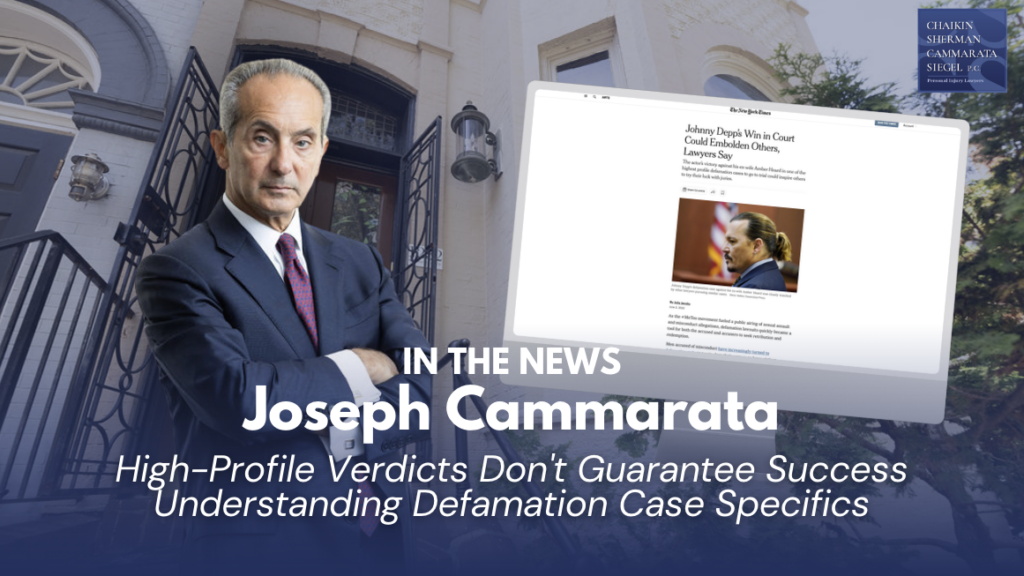
The Johnny Depp v. Amber Heard jury verdict captured national attention and raised important questions about defamation law, free speech, and how courts balance competing interests. Joseph Cammarata, partner at Chaikin, Sherman, Cammarata & Siegel and experienced defamation attorney, provides expert analysis in The New York Times on the case’s broader implications. While the verdict may inspire others to consider defamation litigation, Cammarata emphasizes that the Depp-Heard case was “very, very unique” in its specific facts and circumstances. The case involved complex evidence about personal relationships, social media reach, and statements that courts had to evaluate under strict defamation standards. Not every disputed claim rises to a viable defamation lawsuit, and potential litigants should carefully assess whether they have the legal foundation and evidentiary support necessary for success.
Defamation law requires plaintiffs to prove that false statements were made, that those statements were published, and that they caused measurable harm to reputation. The burden falls on the plaintiff to demonstrate these elements, and the nature of the statement (opinion vs. fact), the public figure status of the parties, and the statements’ reach all affect the legal analysis. Cammarata’s message to others considering defamation litigation is clear: the Depp verdict should not dissuade someone with a legitimate case from seeking justice, but neither should it create unrealistic expectations. Each case stands on its own facts. The verdict demonstrates that juries take reputation seriously and will hold speakers accountable when statements cross the line from opinion into false, defamatory fact. For those with genuine defamation claims, skilled legal representation and thorough case evaluation are essential.
If you believe your reputation has been damaged by false statements, experienced legal counsel can evaluate your potential claim. For defamation or civil litigation matters, contact us for a free consultation.